
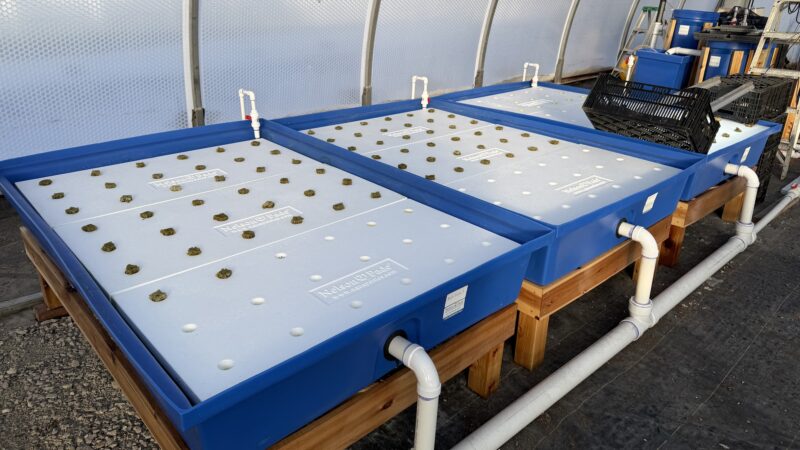
This winter, “Farmer Miller” (as Jeff’s students affectionately call him) wanted to share something new with both his classroom and the community. Thanks to generous grant funding, we’ve set up a producer-scale aquaponics system right here in a corner of our seedling greenhouse. It’s become a wonderful winter learning lab for demonstrating year-round growing, self-sufficiency, and practical sustainability for Midwest growers.
So what exactly is aquaponics, and what’s growing?
A walkthrough of our system when it was first filled with water.
Aquaponics is the art of raising fish and plants together in one symbiotic system. The fish provide nutrients to the plants via bacteria that convert ammonia to nitrite, which is then converted to nitrate, which the plants can use. In return, the plants help filter and clean the water for the fish. Both “crops” thrive together when we create just the right environment, and eventually, students can harvest both for food.
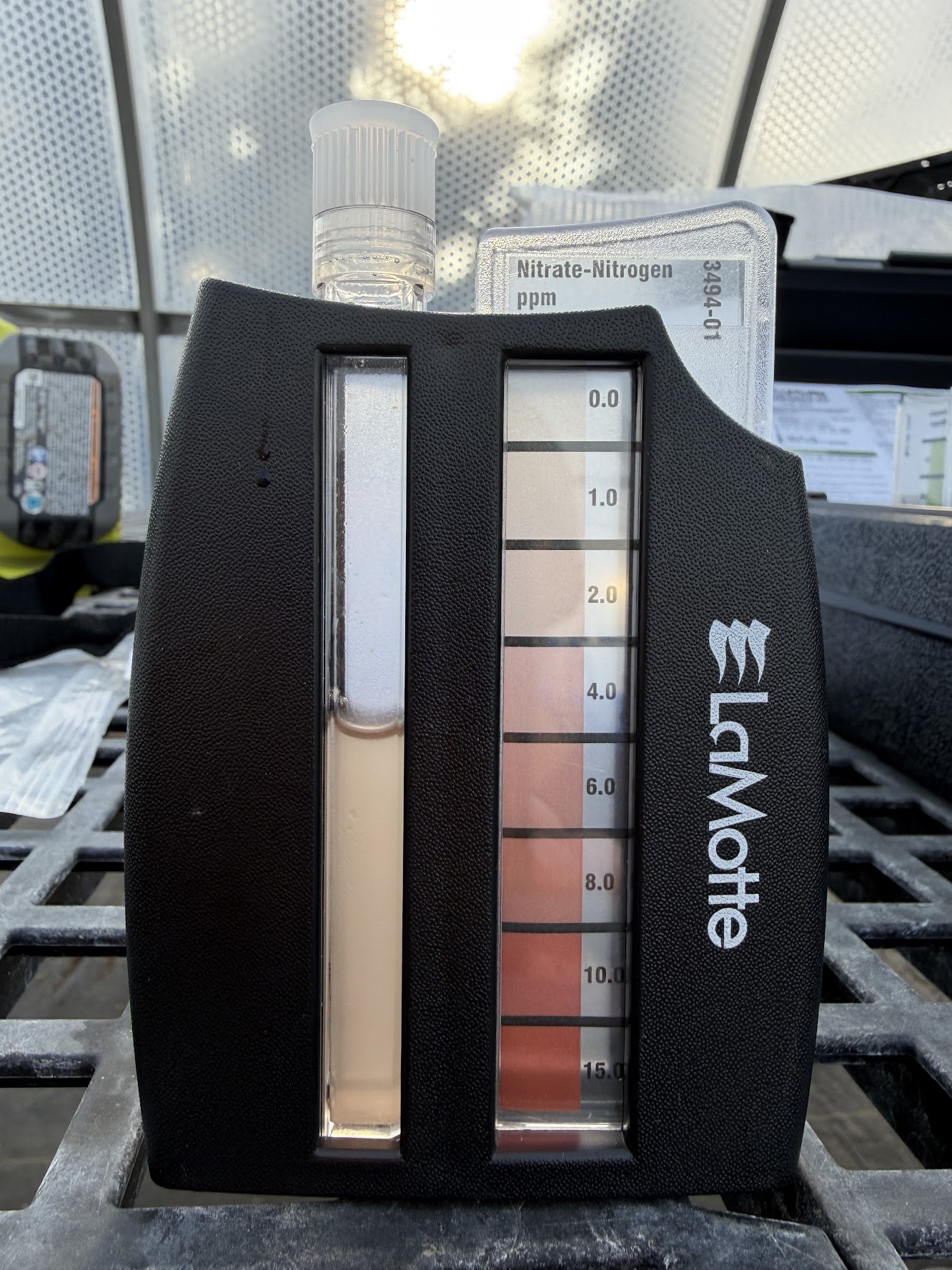
Nitrate levels are growing!
Just like growing in soil, aquaponics requires a delicate balance—what is called the “Goldilocks zone”—where nutrient levels, pH, airflow, and temperature are at a spot that works for the fish, plants, and beneficial bacteria in the system. Last week, Jeff’s students ran fascinating water-quality experiments, comparing water from our aquaponic system with melted snow, tap water, and even vinegar to observe pH differences. It was a hands-on way to understand what makes an aquaponic system balanced.
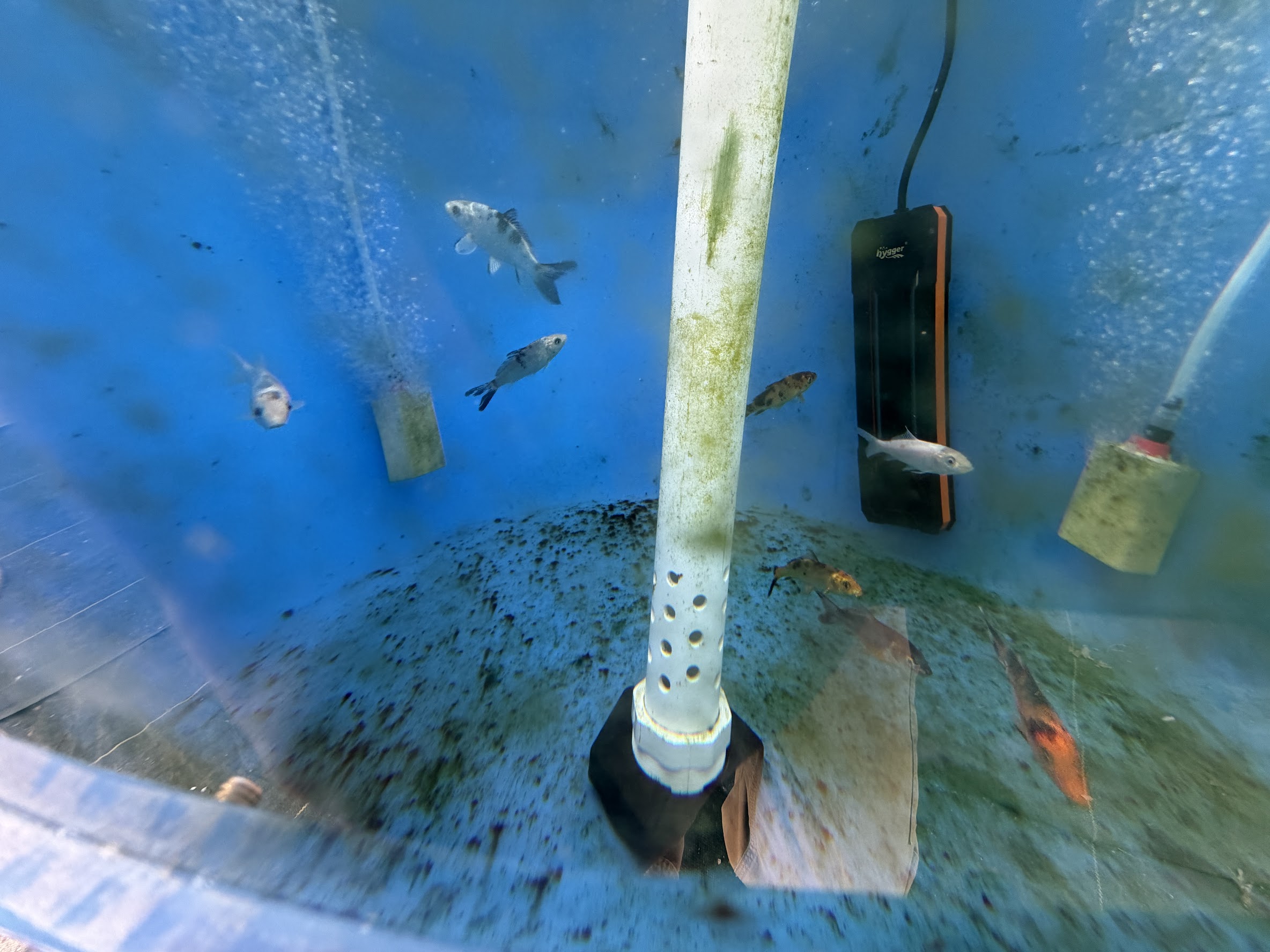
Good news! We’re seeing the onset of algae growth in response to increased nitrate levels in the water.
We’re raising eight koi as our “pets” to get the good bacteria started and generate some preliminary nutrients for the system, as seen here. In the coming weeks, we plan to bring in bluegill as our freshman class of fish.
Over the weekend, our interns tested water quality, monitored fish health, and began setting up a clever rotational system to separate the small fish from the medium and large fish. This keeps the bigger fish from potentially eating the smaller fish or outcompeting the little ones at feeding time. One of the interns smiled when she realized they’d done the same thing with our chickens last fall—separating older and younger chickens so everyone was calmer and got their fair share.
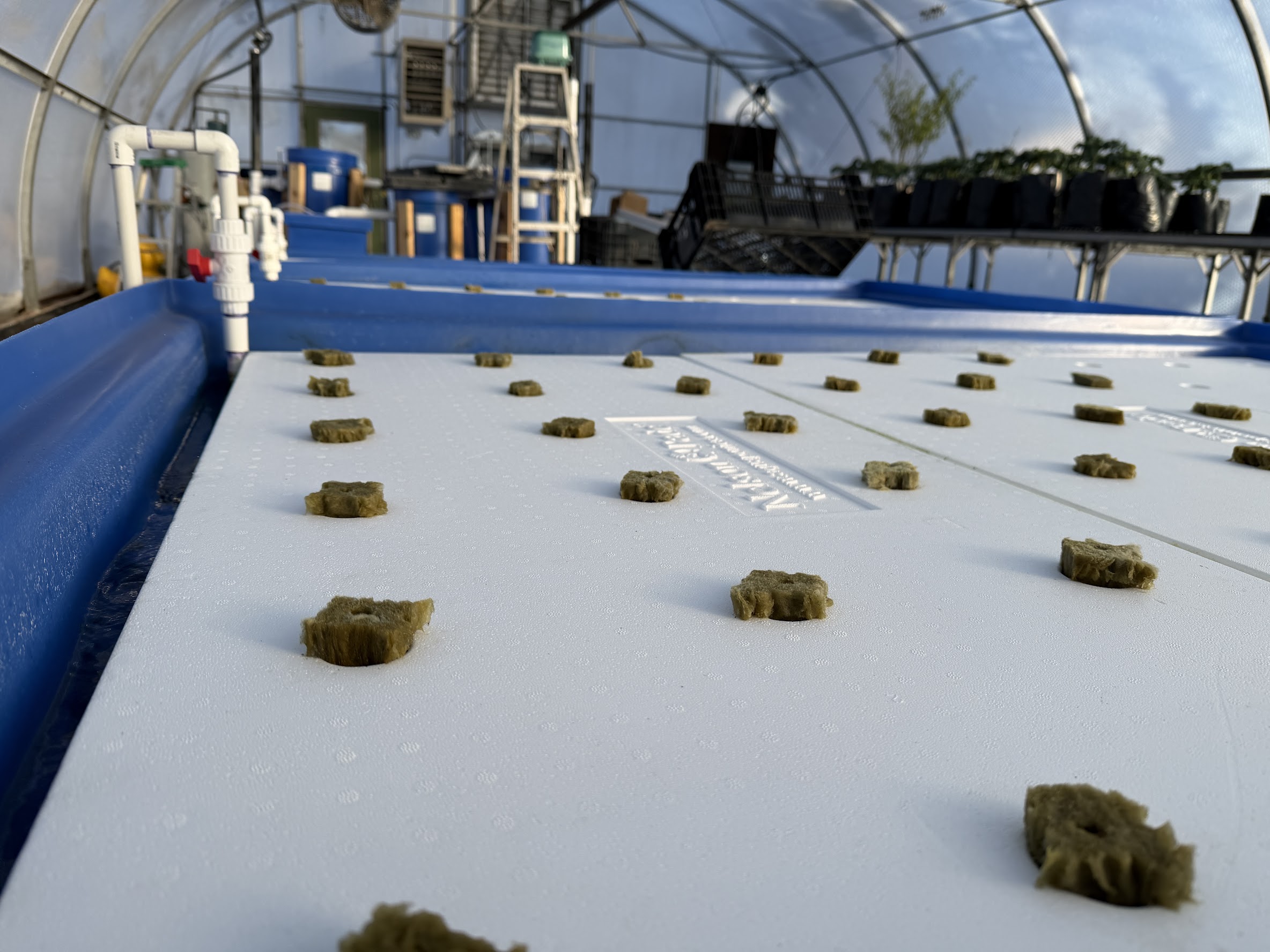
The first seeds of 2026 are started!
Students also planted a variety of lettuces, Swiss chard, and herbs in specialized rockwool planters to experiment with growth patterns and nutrient requirements in our winter system. Our hope is these early greens will be ready for harvest in late February—just when our outdoor winter greens are taking their cold-weather rest. We’ll keep you posted!
Grateful for your support as we and students grow and learn,
Jeff, Jen, Saul, and the Liberty Prairie team